
Virtual Event
Decision Time:
AI and our Nuclear Arsenal



Command and control of nuclear weapons is a delicate and complicated system, designed to prevent error while ensuring reliability under high-pressure conditions. In environments where vast amounts of data shape high-stakes outcomes, artificial intelligence has become a natural consideration.
The integration of a rapidly evolving technology raises fundamental questions about responsibility, data quality, and system reliability. When a single error could have irreversible consequences, how can confidence be built around the integration of machine learning into systems that have long relied on human judgment and oversight? What guardrails should be maintained? Where are there opportunities for international collaboration and consensus?
Join the Bulletin of the Atomic Scientists and the Outrider Foundation as a group of experts examine the current state of AI in nuclear command and control, identify where the greatest risks reside, and explore the policies that must be considered now to govern this technology in the years ahead.
In partnership with:

Speakers
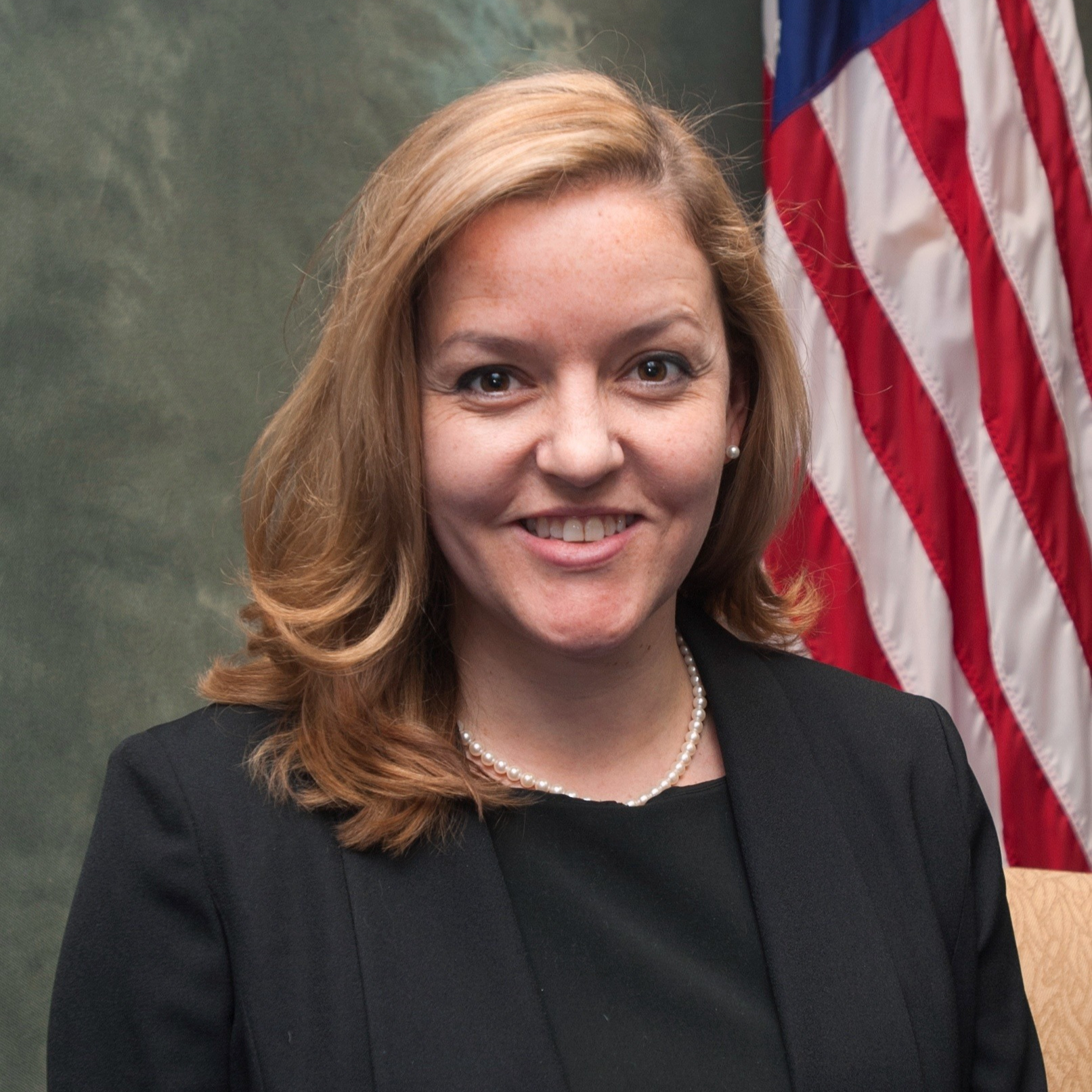
Alexandra Bell is the president and CEO of the Bulletin of the Atomic Scientists. Prior to this, Bell served as the Deputy Assistant Secretary for Nuclear Affairs in the Bureau of Arms Control, Deterrence, and Stability (ADS) at the U.S. Department of State. From 2017 to 2021, she was the Senior Policy Director at the Center for Arms Control and Non-Proliferation and the Council for a Livable World. Previously, Bell served as a Senior Advisor in the Office of the Under Secretary of State for Arms Control and International Security and as an Advisor in ADS, then named the Bureau of Arms Control, Verification and Compliance. She also worked on nuclear policy issues at the Ploughshares Fund and the Center for American Progress. She received a Master’s degree in International Affairs from the New School, and a Bachelor’s degree in Peace, War and Defense from the University of North Carolina at Chapel Hill.
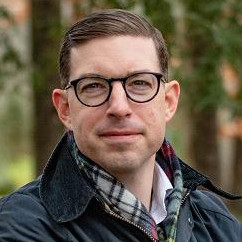
Paul Lushenko is a U.S. Army Lieutenant Colonel. He serves as an Assistant Professor at the U.S. Army War College, Professorial Lecturer at The George Washington University, Senior Fellow at Cornell University’s Tech Policy Institute and Institute of Politics and Global Affairs, and Non-Resident Expert at RegulatingAI. His work lies at the intersection of emerging technologies, politics, and national security, and he also researches the implications of great power competition for regional and global order-building. Paul is the author and editor of three books, including Drones and Global Order: Implications of Remote Warfare for International Society (2022), The Legitimacy of Drone Warfare: Evaluating Public Perceptions (2024), and Afghanistan and International Relations (2025). Paul has written extensively on emerging technologies and war, publishing in academic journals, policy journals, and media outlets such as Security Studies, Foreign Affairs, and The Washington Post. He earned his Ph.D. and M.A. in International Relations from Cornell University. He also holds an M.A. in Defense and Strategic Studies from the U.S. Naval War College, an M.A. in International Relations and a Master of Diplomacy from The Australian National University, and a B.S. from the U.S. Military Academy.
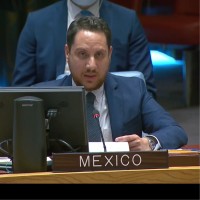
Eduardo Alcibiades Sánchez Kiesslich is the Director-General for the United Nations in the Mexican Ministry of Foreign Affairs. Recently he was involved in authoring and presenting “Possible Risks of Integration of Artificial Intelligence in Command, Control and Communication Systems of Nuclear Weapons,” the Mexico-led resolution which was adopted at the UN General Assembly in 2025. Prior to this he was the Political Coordinator at the Permanent Mission of Mexico to the United Nations. He also served in cooperation and cultural affairs at the Embassy of Mexico in Kenya, along with other leadership postings through the Ministry of Foreign Affairs office in Mexico. He received an MA in Nonproliferation and Terrorism Studies at the Middlebury Institute of Internation Studies at Monterey, and his BA (equivalent) in International Relations through the Universidad Iberoamericana, Ciudad de México.
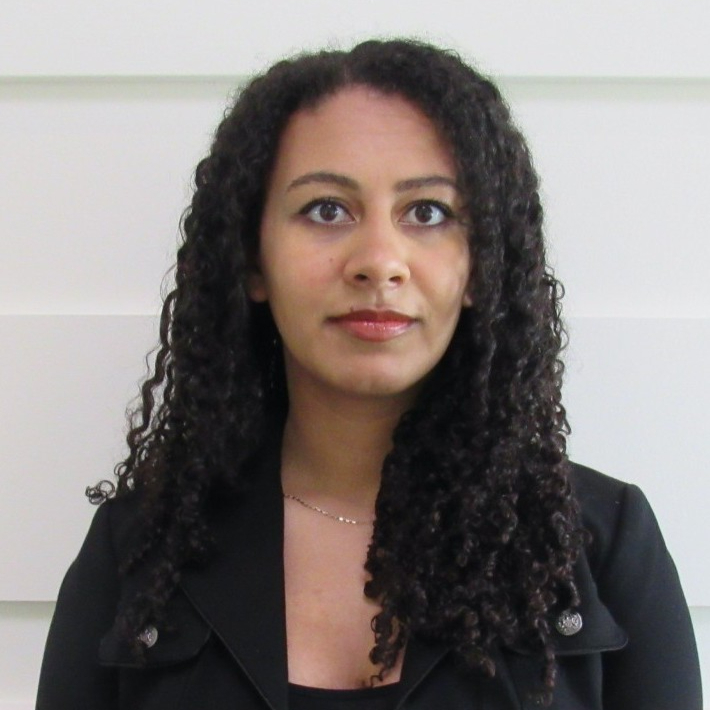
Leah Walker is the Executive Director for the Berkeley Risk and Security Lab. She oversees the Lab’s interdisciplinary research portfolio which includes nuclear arms control, nuclear weapons policy, defense analyses, emerging defense technologies, the governance of emerging technologies, industrial policy, and strategic competition. Leah also conducts research on the governance of military and commercial artificial intelligence, Russian and Chinese nuclear posture and modernization, nuclear and radiological security, and maritime security and strategy.
Special Remarks

Robert K. Elder is the President & CEO of Outrider Foundation. He also serves as a voting member of Outrider's Board of Directors. Elder is the author or editor of 20+ books, and his work has appeared in The New York Times, The Chicago Tribune, The Paris Review, The Los Angeles Times, The Boston Globe, Salon.com, and many other publications. He previously served as the Chief Digital Officer at the Bulletin of the Atomic Scientists and the Executive Director of Digital Product Development & Innovation at Crain Communications.
This event has now concluded. You can watch a recording on our YouTube channel.
For upcoming events, visit our website.
COPYRIGHT © 2026 BULLETIN OF THE ATOMIC SCIENTISTS. ALL RIGHTS RESERVED. | TERMS OF USE | PRIVACY POLICY
PO BOX 15461, CHICAGO, IL 60615 | 773.834.3779