
Virtual Event
Climate Change: New Data, New Debate
(Illustration credit: Sarah Starkey)

Monday, June 22, 2026

2:30 p.m. - 3:15 p.m. CT

YouTube
The field of climate change is constantly changing, and every shift brings new levels of scientific disinformation. For example, recent analysis has emerged on RCP8.5, a global scenario with a worst case outcome that has been scaled back as the costs of renewable energy have fallen. While one particularly extreme model for warming has become more optimistic, the overall outlook remains worrisome. The response to this news, unsurprisingly, has re- ignited attacks on climate research. On June 22, the Bulletin of the Atomic Scientists will host a live dialogue on YouTube with the authors of a recently published article explaining these new developments, the political debate around it, and how to understand the current outlook using the most recent data.
Each year, new data strengthens our understanding of the planet's rising temperatures and growing environmental instability. With the increase in uncontrollable wildfires, stronger storms, and rising ocean levels, the question remains of whether we are too late to reverse – or significantly slow – our changing climate.
On April 17, join the Bulletin of the Atomic Scientists to explore the risks of climate change and how to understand what planetary shifts are inevitable – and which are solvable – in this current era of scientific skepticism.
"Manifestations of a changed climate continued to be felt increasingly across the world, even as the clean-energy transition continued to gather pace against formidable headwinds" – Doomsday Clock 2025 Climate Change Statement, Science and Security Board.
There have been a few bright spots towards reaching targets set in the Paris Agreement, such as increases in sustainable energy generation and climate finance. Still, these advances have not yet slowed consistent record-breaking heat and a continued year-over-year rise of atmospheric carbon– leaving us to question whether there is a ‘tipping point’ – a threshold beyond which climate change is irreversible.
Speakers
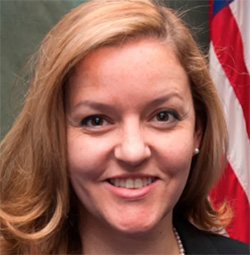
Alexandra Bell is the president and CEO of the Bulletin of the Atomic Scientists. Prior to this, Bell served as the Deputy Assistant Secretary for Nuclear Affairs in the Bureau of Arms Control, Deterrence, and Stability (ADS) at the U.S. Department of State. From 2017 to 2021, she was the Senior Policy Director at the Center for Arms Control and Non-Proliferation and the Council for a Livable World. Previously, Bell served as a Senior Advisor in the Office of the Under Secretary of State for Arms Control and International Security and as an Advisor in ADS, then named the Bureau of Arms Control, Verification and Compliance. She also worked on nuclear policy issues at the Ploughshares Fund and the Center for American Progress. She received a Master’s degree in International Affairs from the New School, and a Bachelor’s degree in Peace, War and Defense from the University of North Carolina at Chapel Hill.

Genevieve Guenther is the founding director of End Climate Silence and the author of The Language of Climate Politics: Fossil-Fuel Propaganda and How to Fight It. Guenther consults and advises on new solutions for climate communication, including how to talk about climate and energy in elections, the future of climate politics and clean-energy development, myths in climate economics, disinformation about climate technologies, and climate policy in China.
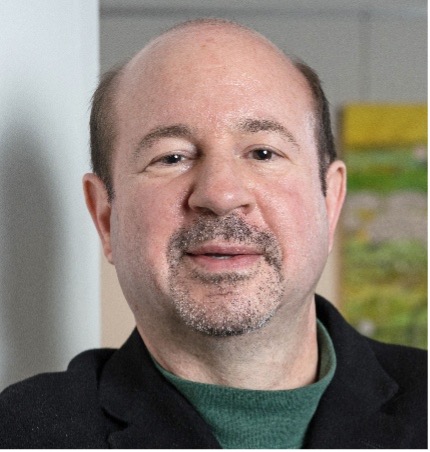
Michael E. Mann is presidential distinguished professor and director of the Center for Science, Sustainability and the Media at The University of Pennsylvania. He is co-author with Peter Hotez of the newly published book Science Under Siege: How to Fight the Five Most Powerful Forces that Threaten Our World. His previous book was Our Fragile Moment: How Lessons from Earth’s Past Can Help Us Survive the Climate Crisis.
© 2026 BULLETIN OF THE ATOMIC SCIENTISTS
1307 E 60TH ST CHICAGO, IL 6063