
Virtual Event
The Fallout Next Door: The Nuclear Stories No One Is Telling
Image by Sarah Starkey

Tuesday, December 15, 2026

2:00 p.m. - 2:45 p.m. CT

YouTube
Signs of the nuclear age are all around us but aren’t always seen. Consider radioactive contamination that lingers even after projects are gone, cropping up in unexpected places like elementary schools outside St. Louis or nature parks in Colorado. Echoes of our nuclear past – and present - are reminders of the destruction these weapons can cause without even being used.
Until recently, much of the information was classified, and the science was obscure. Today, researchers and activists are working on these problems across the country but need to partner with journalists and storytellers to be heard. What stories need to be told, and what resources are available to support this need?
Join Outrider and the Bulletin of the Atomic Scientists for a YouTube livestream that presents untold nuclear stories, explores how journalists can partner with researchers to tell them, and shares new data and reporting tools to support those trying to understand the risks and tell the stories that keep the public informed.
The world has gone from rotary phones to smartphones in the blink of an eye, and now many are buying apps and gadgets to “brick” their phones and stay offline. What are the net gains and losses from this still young technology–especially as the risks of connectivity grow?
There are countless positives to the internet, including fighting threats that the Bulletin covers. Online scientific collaborations have helped fight disease; social platforms have become a tool for climate organizing; and open-source intelligence tools have helped oversight groups monitor nuclear stockpiles.
At the same time, the disfunctions of the web seem to be at the heart of a broken politics that fails to respond to systemic threats, creates new geopolitical tension, and instills new existential dread as information warfare expands, the rise of AI, and environmental degradation.
Even though the internet has made some aspects of life better, do we need to log off to fix climate change? To protect our grid and our information? To maintain the very nature of society?
Join the Bulletin for a deep analysis of what the internet has brought, what it has wrought, and if the costs have begun to outweigh the benefits.
Speakers
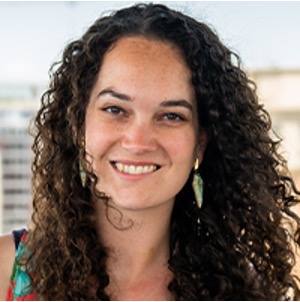
Lilly Adams is a Campaign Manager for the Global Security Program at the Union of Concerned Scientists. Adams works on nuclear weapons policy and outreach with a focus on supporting nuclear frontline community members impacted by the testing and production of nuclear weapons. She is also the co-founder of Nuclear Voices, which seeks to amplify nuclear frontline communities and issues of nuclear justice, and serves as a member of the Board of Directors at the Arms Control Association. She is a 2019 alumna of IGCC’s Public Policy and Nuclear Threats Boot Camp, and previously ran the anti-nuclear weapons program at Washington Physicians for Social Responsibility. She earned a Bachelor's degree from UC Berkeley in Society and Environment.
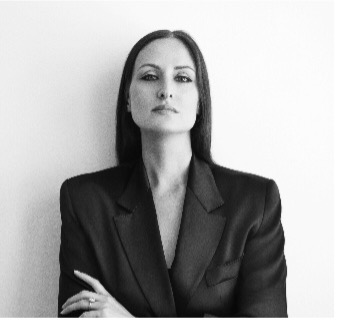
Lesley M. M. Blume is an award-winning journalist, historian, and New York Times bestselling author. She has reported for the New York Times, the Washington Post, the Wall Street Journal and WSJ Magazine, Vanity Fair, National Geographic, Columbia Journalism Review, the Bulletin of the Atomic Scientists, Slate, Vogue, Town & Country, and Air Mail, among many others. Further, Blume has reported extensively on the 1945 Trinity nuclear test and the aftermath of U.S. nuclear tests across the country and in the Pacific. She published Fallout: The Hiroshima Cover-up and the Reporter Who Revealed it to the World in 2020, and is currently working on her third major non-fiction book, A Devil’s Bargain, which documents coverage of the Manson murder saga. Blume has also served as literary executor of the estate of Lost Generation icon Sylvia Beach, founder and owner of Paris’s Shakespeare and Company bookstore and library, and original publisher of James Joyce’s Ulysses.
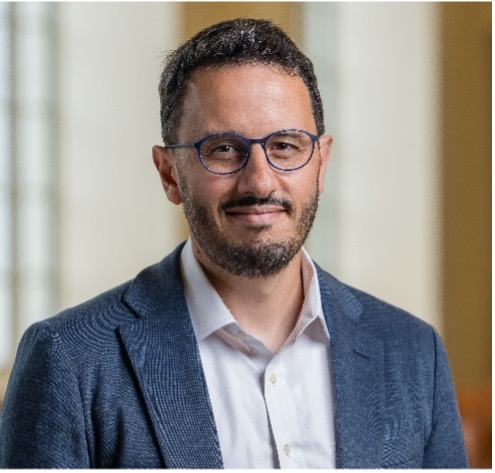
Sébastien Philippe is an Assistant Professor of Nuclear Engineering and Engineering Physics at the University of Wisconsin–Madison, with faculty affiliations in the La Follette School of Public Affairs and the Department of Political Science. He is a 2025 MacArthur Fellow and leads evident, a research lab dedicated to understanding and reducing the risks posed by nuclear weapons and emerging technologies to international peace and security. His research focuses on modeling the consequences of nuclear war, monitoring and verification of nuclear activities in support of nonproliferation and arms control, and the environmental and public health legacies of nuclear testing. In July 2025, he was appointed by the UN Secretary-General to the Independent Scientific Panel on the Effects of Nuclear War, on which he serves as Scientific Secretary. He earned a Ph.D. in Mechanical and Aerospace Engineering from Princeton University, an MSc from the Institut National des Sciences Appliquées de Lyon, and a BA from Trinity College Dublin.
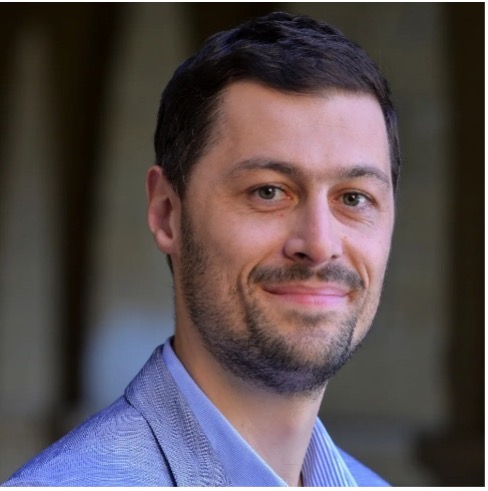
François Diaz-Maurin is the editor for nuclear affairs at the Bulletin of the Atomic Scientists. Previously, Diaz-Maurin was a MacArthur Foundation Nuclear Security Visiting Scholar at the Center for International Security and Cooperation (CISAC), Stanford University, and a European Commission’s Marie Sklodowska-Curie Fellow. He has been a scientific advisor to members of the European Parliament on nuclear issues, and he is a founding member of the Emerging Leaders in Environmental and Energy Policy network (ELEEP) of the Atlantic Council, Washington D.C. and the Ecologic Institute, Berlin. He received his B.Sc. and M.Sc. from the University of Rennes 1, his Ph.D in Environmental and Sustainability Sciences from the Universitat Autònoma de Barcelona, and his postdoctoral training in nuclear materials, geochemistry of radionuclides and nuclear security from Stanford University.
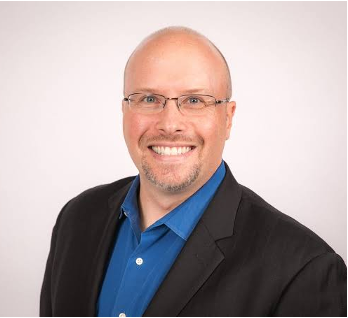
Introductory Statements: Robert K. Elder is the President and CEO of Outrider. He previously served as Chief Digital Officer at the Bulletin of the Atomic Scientists .Elder has deep roots in the digital media and innovation spaces, having served as the Executive Director of Digital Product Development & Innovation for Crain Communications and Vice President of Content for Sun-Times Media Local. He has been a mentor at startup incubators such as 1871 Chicago and Northwestern University’s The Garage. Elder is also the award-winning author of 12 books, including Last Words of the Executed and Hidden Hemingway. In 2019, Elder co-founded Token.Agency, a consulting firm focused on emerging technology and blockchain projects. Currently, Elder serves as the president of the Chicago Headline Club(opens in new tab), the largest chapter of the Society of Professional Journalists in the nation.
© 2026 BULLETIN OF THE ATOMIC SCIENTISTS
1307 E 60TH ST CHICAGO, IL 6063