Virtual Event
The Politics of Climate Change: Not Hopeless?
The WA Parish Generating Station in Texas, which has both natural gas and coal-fired power plants, is the second largest conventional power station in the United States. (RM VM/Wikipedia)

Tuesday, December 1, 2026

12:00 p.m. - 12:45 p.m. CT

YouTube
Climate change remains a hot button political issue, with the right and left seemingly far apart on all things environmental. This divide has led to climate-related issues being a very public target for the Trump Administration, resulting in major cuts in research funding, staff reductions in weather modeling, reduced regulations, and increases in fossil fuel extraction.
Where does the climate-focused community stand amidst the turmoil? Is there any optimism for collaboration moving forward?
The hope is that the economic and security elements of sustainability – national security, job creation, energy independence – are real opportunities for collaboration. Common ground may not be close, but it may not be impossible.
Join the Bulletin for an exploration of how the research and innovation community is managing under President Trump, and going forward what areas might represent green shoots out of scorched earth.
The world has gone from rotary phones to smartphones in the blink of an eye, and now many are buying apps and gadgets to “brick” their phones and stay offline. What are the net gains and losses from this still young technology–especially as the risks of connectivity grow?
There are countless positives to the internet, including fighting threats that the Bulletin covers. Online scientific collaborations have helped fight disease; social platforms have become a tool for climate organizing; and open-source intelligence tools have helped oversight groups monitor nuclear stockpiles.
At the same time, the disfunctions of the web seem to be at the heart of a broken politics that fails to respond to systemic threats, creates new geopolitical tension, and instills new existential dread as information warfare expands, the rise of AI, and environmental degradation.
Even though the internet has made some aspects of life better, do we need to log off to fix climate change? To protect our grid and our information? To maintain the very nature of society?
Join the Bulletin for a deep analysis of what the internet has brought, what it has wrought, and if the costs have begun to outweigh the benefits.
Speakers

Mike Murphy is the founder of EVs for All America and the American EV Jobs Alliance. In addition, he is an accomplished political media strategist for the Republican Party, having served as a top advisor to John McCain, Mitt Romney, Jeb Bush, and Arnold Schwarzenegger, along with dozens of successful GOP governors, senators, and members of Congress. He is the co-host of the Hacks on Tap podcast, and serves as co-director of the University of Southern California’s Center for the Political Future. He has also served as a founding board member of the University of Chicago Institute of Politics and as a senior fellow at Harvard’s Belfer Center for Science and International Affairs.
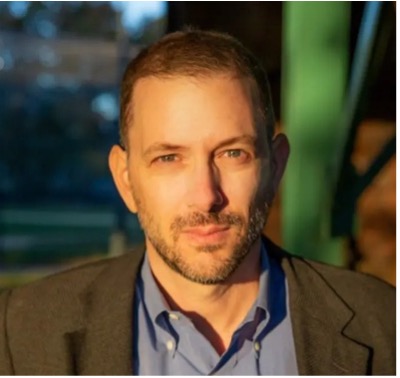
Adam Sobol is a professor at Columbia University’s Lamont-Doherty Earth Observatory and Engineering School, where he studies the dynamics of climate and weather phenomena, with a focus on understanding the risks to human society from extreme weather and climate change. He is author or co-author of over 200 peer-reviewed scientific articles; a popular book about Hurricane Sandy, Storm Surge; and numerous op-eds. Sobel also hosts Deep Convection, a podcast featuring real conversations between climate scientists.

Leah C. Stokes is the Anton Vonk Associate Professor of Environmental Politics in the Department of Political Science at the University of California, Santa Barbara (UCSB). She works on energy, climate and environmental politics with a focus on representation and public opinion; voting behavior; and public policy. Within environmental politics, she researches climate change, renewable energy, water and chemicals policy. In 2022, she was named an advocate on TIME100 Next, and as one of Business Insider’s top 30 global leaders working toward climate solutions.

Moderator: Sharon Weinberger is the editor-in-chief of the Bulletin of the Atomic Scientists. She was previously the National Security Editor of the Wall Street Journal from 2022 to 2026. She was a 2026 Omidyar Network reporter-in-residence and has also held fellowships at the Radcliffe Institute for Advanced Study at Harvard University, MIT’s Knight Science Journalism program, the Woodrow Wilson International Center for Scholars, the International Reporting Project at Johns Hopkins School of Advanced International Studies, and Northwestern University’s Medill School of Journalism. She is the author of four books on national security and technology, including the forthcoming Valley of Death: How Big Tech Is Fueling the Future of War, to be published in September 2026 by Little, Brown. Her writing has appeared in the Wall Street Journal, New York Times, Nature, New York Magazine, WIRED, and the Washington Post, among other publications.
© 2026 BULLETIN OF THE ATOMIC SCIENTISTS
1307 E 60TH ST CHICAGO, IL 6063