
Virtual Event
End Credits: Doomsday on Film
(An iconic scene from “Threads.” BBC screen capture.)

Wednesday, July 29, 2026

12:00 p.m. - 1:00 p.m. CT

YouTube
From the silver screen to streaming, cinema has always been fascinated by catastrophe. Last year, Netflix’s House of Dynamite caused dinner table debates around the world. Prior films such as Oppenheimer, Contagion, The Matrix, Dr. Strangelove, The Day After Tomorrow and Threads had their moments, showcasing the risk of pandemics, climate change, disruptive technology, and nuclear devastation to millions.
Which films are the most entertaining? Which are useful case studies for the real-world risks facing humanity? And which are both?
At this live event, the Bulletin’s panel of experts and movie buffs will unveil their favorite films and debate their collective Top Ten must-watch global risk films of all time.
Each year, new data strengthens our understanding of the planet's rising temperatures and growing environmental instability. With the increase in uncontrollable wildfires, stronger storms, and rising ocean levels, the question remains of whether we are too late to reverse – or significantly slow – our changing climate.
On April 17, join the Bulletin of the Atomic Scientists to explore the risks of climate change and how to understand what planetary shifts are inevitable – and which are solvable – in this current era of scientific skepticism.
"Manifestations of a changed climate continued to be felt increasingly across the world, even as the clean-energy transition continued to gather pace against formidable headwinds" – Doomsday Clock 2025 Climate Change Statement, Science and Security Board.
There have been a few bright spots towards reaching targets set in the Paris Agreement, such as increases in sustainable energy generation and climate finance. Still, these advances have not yet slowed consistent record-breaking heat and a continued year-over-year rise of atmospheric carbon– leaving us to question whether there is a ‘tipping point’ – a threshold beyond which climate change is irreversible.
Speakers
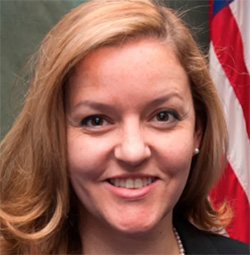
Alexandra Bell is the president and CEO of the Bulletin of the Atomic Scientists. Prior to this, Bell served as the Deputy Assistant Secretary for Nuclear Affairs in the Bureau of Arms Control, Deterrence, and Stability (ADS) at the U.S. Department of State. From 2017 to 2021, she was the Senior Policy Director at the Center for Arms Control and Non-Proliferation and the Council for a Livable World. Previously, Bell served as a Senior Advisor in the Office of the Under Secretary of State for Arms Control and International Security and as an Advisor in ADS, then named the Bureau of Arms Control, Verification and Compliance. She also worked on nuclear policy issues at the Ploughshares Fund and the Center for American Progress. She received a Master’s degree in International Affairs from the New School, and a Bachelor’s degree in Peace, War and Defense from the University of North Carolina at Chapel Hill.
Daniel W. Drezner is academic dean and distinguished professor of international politics at the Fletcher School at Tufts University, where he is co-director of Fletcher’s Russia and Eurasia Program. His research focuses on economic statecraft, US foreign policy, global political economy, and power in world politics. Drezner is a nonresident senior fellow at the Chicago Council on Global Affairs, and an academic partner at State Street. He’s authored seven books, including Theories of International Politics and Zombies and All Politics is Global.

Elise Rowan serves as the deputy vice president of Communications for the Nuclear Threat Initiative, where she co-leads the organization’s Critical Mass project, which harnesses the power of culture and campaigns to change the narrative on nuclear weapons and shift political incentives toward policies that reduce nuclear risks. Elise is an entrepreneur and founder of Better Future Families, a start-up focused on helping millennial parents raise changemakers and giving families a roadmap to act on the issues they care about most. She also spent six years in various fundraising and strategic communication advisory roles with the National Court Appointed Special Advocate (CASA) Association, and held positions with the Senate Foreign Relations Committee, the U.S. Department of State’s Office of Weapons of Mass Destruction Terrorism, the Ploughshares Fund, and the Stimson Center.
© 2026 BULLETIN OF THE ATOMIC SCIENTISTS
1307 E 60TH ST CHICAGO, IL 6063