
Virtual Event
Too Good for Too Long? Arms Control, Foreign Policy, and the American People in 2026
(Illustration credit: freshidea via stock.adobe.com)

Thursday, May 28, 2026

12:00 p.m. - 12:45 p.m. CT

YouTube
The global order is shifting, and the US is driving the change. The rebranded Department of War is living up to its new name, a rekindled arms race may follow the expiration of New START, and international institutions are struggling to maintain their relevance. Yet beyond higher prices at the store and at the pump, most Americans are not feeling the effects in their day to day lives - for now at least. Is this global shift a natural progression, or the singular worldview of President Trump? Does the American public largely agree with where we are headed, or is it their disconnect with policy that is allowing these seismic shifts?
Each year, new data strengthens our understanding of the planet's rising temperatures and growing environmental instability. With the increase in uncontrollable wildfires, stronger storms, and rising ocean levels, the question remains of whether we are too late to reverse – or significantly slow – our changing climate.
On April 17, join the Bulletin of the Atomic Scientists to explore the risks of climate change and how to understand what planetary shifts are inevitable – and which are solvable – in this current era of scientific skepticism.
"Manifestations of a changed climate continued to be felt increasingly across the world, even as the clean-energy transition continued to gather pace against formidable headwinds" – Doomsday Clock 2025 Climate Change Statement, Science and Security Board.
There have been a few bright spots towards reaching targets set in the Paris Agreement, such as increases in sustainable energy generation and climate finance. Still, these advances have not yet slowed consistent record-breaking heat and a continued year-over-year rise of atmospheric carbon– leaving us to question whether there is a ‘tipping point’ – a threshold beyond which climate change is irreversible.
Speakers
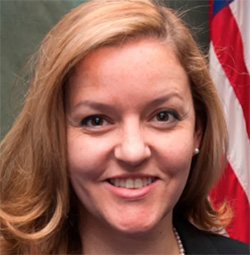
Alexandra Bell is the president and CEO of the Bulletin of the Atomic Scientists. Prior to this, Bell served as the Deputy Assistant Secretary for Nuclear Affairs in the Bureau of Arms Control, Deterrence, and Stability (ADS) at the U.S. Department of State. From 2017 to 2021, she was the Senior Policy Director at the Center for Arms Control and Non-Proliferation and the Council for a Livable World. Previously, Bell served as a Senior Advisor in the Office of the Under Secretary of State for Arms Control and International Security and as an Advisor in ADS, then named the Bureau of Arms Control, Verification and Compliance. She also worked on nuclear policy issues at the Ploughshares Fund and the Center for American Progress. She received a Master’s degree in International Affairs from the New School, and a Bachelor’s degree in Peace, War and Defense from the University of North Carolina at Chapel Hill.

Tom Nichols is a staff writer at The Atlantic and a contributor to the Atlantic Daily newsletter. He is a professor emeritus of national-security affairs at the U.S. Naval War College, where he taught for 25 years, and an instructor at the Harvard Extension School. He has served as a legislative aide in the Massachusetts House and the U.S. Senate. He writes about international security, nuclear weapons, Russia, and the challenges to democracy in the United States and around the world—along with occasional contrarian views on popular culture. His books include The Death of Expertise and Our Own Worst Enemy: The Assault From Within on Modern Democracy. He is also a five-time undefeated Jeopardy champion.

Mari Faines is a board fellow at the Bulletin of the Atomic Scientists and serves on Democracy Forward’s Policy and Public Affairs team as the Manager of External Affairs and Coalitions. Just prior, Faines served as a strategic advisor and policy expert at the U.S. Department of State, working on AUKUS, the trilateral security agreement between Australia, the United Kingdom, and the United States. Prior to joining the State Department, she spent five years in the United Kingdom completing graduate work in Peace and Security studies, while working as a project manager for an international solutions corporation. Upon returning to the United States, she continued working at the intersection of nuclear nonproliferation policy and social justice issues. Faines has written for a multitude of publications and was a former podcast host. She remains engaged in global policy issues by volunteering with various advocacy organizations and has been recognized for many of these contributions over the past decade. Faines holds a Master’s of Science (MSc) from SOAS University of London and a Bachelor’s from Colgate University.
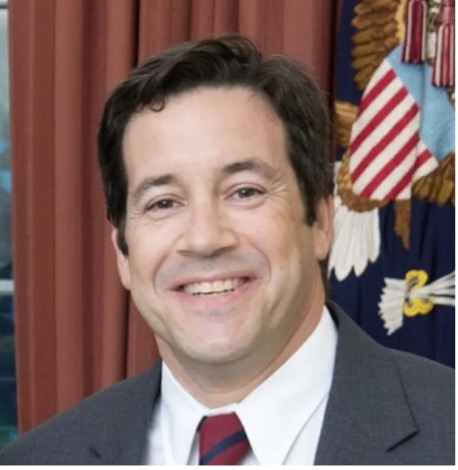
Jon B. Wolfsthal is a member of the Bulletin’s Science and Security Board, and a US Nuclear Policy Fellow at PAX sapiens. Prior to this he was the Director of the Global Risk program at the Federation of American Scientists. His government roles include time as the Special Assistant to President of the United States Barack Obama for National Security Affairs, Senior Director at the National Security Council for arms control and nonproliferation, Special Advisor to Vice President Joseph R. Biden for nuclear security and nonproliferation, director for nonproliferation on the National Security Council. During his government service, he helped negotiate and secure the ratification of the New START arms reduction agreement with the Russian Federation, and helped develop nuclear policy including through the 2010 Nuclear Posture Review. He is the author of dozens of scholarly articles, and has appeared on or been quoted in most leading domestic and international news media outlets (New York Times, Washington Post, The Economist, CNN, NPR. BBC, CBC, VOA, etc).
© 2026 BULLETIN OF THE ATOMIC SCIENTISTS
1307 E 60TH ST CHICAGO, IL 6063